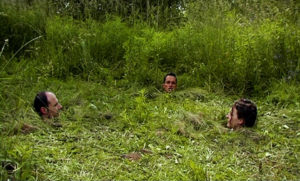
Projekt von Fery Malek-Madani | 49 '| Iran und Belgien
Produktion: Kunst Cantara
Vertrieb: Docmaniacs
Trailer von Afsaneh Salari
Hier geht es zum Trailer
Und hier zu einem Filmbeitrag auf arte zu diesem
preigekrönten Film:
https://info.arte.tv/de/unexposed-wishes-davon-traeumen-iranische-maedchen
Archiv: Veranstaltungen
Veranstaltungen auf dem Haupt-Blog anzeigen?
INTEGRATIONSPRIZEWINNERS ON TOUR "FLÜCHTLINGEN EIN GESICHT GEBEN" – Photographic Exhibit and Stage Program
The photographic exhibit "Flüchtlingen ein Gesicht geben" (Giving Refugees a Face) created by the Jugendmigrationsdienstes (JMD) Lippe des AWO Unterbezirks Hochsauerland/Soest won the first ever awarded Integration Prize 2017 in the category of "Neighborhoods."
The idea: What did young refugees give up when they left their home country? What were their lives like before they came to Germany? Could they attend school? How has their relocation to Germany changed their lives? Do they have more chances here in Germany? Or fewer? 16 young people aged 15-23 with and without migrant backgrounds, many of whom recently came to Germany as refugees, attempt to answer these questions as part of the JMD-Group "Migranten Mischen Mit."
Since September 2015 they have interviewed 23 newly arrived young refugees, compiled their responses, and translated them into German. These young people talk about their home countries, their often long and difficult journeys, their arrival, and their new life in Germany as well as their personal wishes and plans for the future.
The project was so successful that it went on tour throughout Germany as a traveling exhibition with a stage program:
On October 25, 2017
Only in Berlin
at 7:00pm
In the Ulme 35/Interkulturanstalten Westend e. V.
(Ulmenallee 35, 14052 Berlin)
With its photographic exhibit and stage program, the group highlights that behind every picture stands a person with a very individual story.
The vhw–Bundesverband für Wohnen und Stadtentwicklung e. V. supports the project through Mittel für Unterkünfte and will be present on October 25 to greet the guests.
Film: "Life on the Border" – Children from Iraq and Syria tell their Stories
German/Arabic with German subtitles
In "Life on the Border," seven children from Syria and Iraq directed and filmed their own movie. They tell of their experiences and the flight from their homes with bravery and honesty.
The great Kurdish director Bahman Ghobadi, whose works have been honored with the Palme d'Or award in Cannes or the Friedenspreis of the Berlinale, has dedicated himself to this exceptional project. Under his direction, seven children living in refugee camps in Kobanê and Sindschar have the opportunity to develop their own cinematic ideas and tell their stories. Aside from their reports of daily life, the young film directors offer a rare and authentic insight into their past experiences. The film alternates between factual documentation and poetic images as the children talk about the Islamic State and describe the hard life in the refugee camp. They also share their traditions and music, as well as the love for those whom they have lost or who still stand beside them.
After the film, we will hold a discussion with members of the organization Encourage e.V., which supports unaccompanied refugee minors.
Filmclub on Friday: "Tito's Glasses" (German with Arabic subtitles)
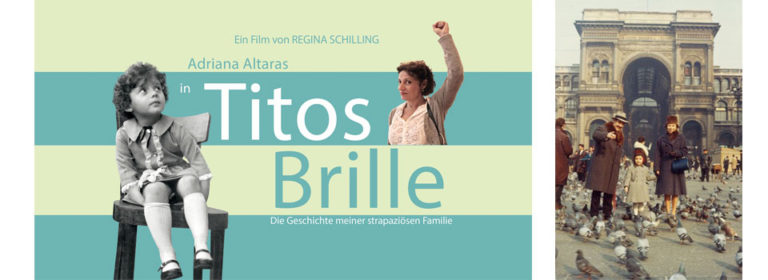
«Tito’s Glasses», a documentary by Regina Schilling featuring Adriana Altaras
(German with Arabic subtitles)
The actress and director Adriana Altaras, a daughter of former Jewish partisans from Croatia, was 7 years old when she came to Germany in 1967 after spending four years in Italy. Along with her came a family story so absurd, tragic and incredible that it had to become a book: «Tito’s Glasses». In 2016, Regina Schilling collaborated with Adriana Altaras, making the story into a documentary in the form of a road movie -- a trip into the past, to Split, to Zagreb, through the story of Altaras' life. Tito's Glasses is a story of survival through humor.
Adriana Altaras will be here in the Ulme35 for the film. Following the screening, we will speak with Adriana Altaras about her book, her film and the thoughts and ideas behind them.
Concert: "IN DARKNESS LET ME DWELL" Melancholy, suffering and exhilaration in songs and arias of the Baroque age
Works by Dowland, Purcell, Krieger and Kruse (UA) - Soprano: Ulrike Romberg, Piano: Felix Kruse
Ulrike Romberg is a singer (lyrical soprano), voice teacher and choir teacher in Berlin. She regurlarly works as a solist and sometimes as a professional stand in for choirs. She manages the "Jungen Chor der Auferstehungsgemeinde Friedrichshain"; four years she worked as the voice teacher of the Pro Musica Chors Berlin. On top of a classical vocal training klassischen (Leigh Hamilton and Friederike Harmsen) she has a degree of the "Freien Universität Berlin" in "Diploma - France studies". Ulrike is fluent in French and English. She already coached and translated in different ensembles in both French and English.
Felix Kruse hat im Rahmen seines Lehramtsstudiums an der UdK Berlin Klavier bei Prof. Rolf Koenen sowie Musikwissenschaft und Musiktheorie bei Prof. Hartmut Fladt studiert. Zudem besuchte er Jazz-Kurse bei Prof. Sigi Busch. Daneben studierte er Germanistik an der FU Berlin. Autodidaktisch und unter Anleitung von Helmut Zapf eignete Felix Kruse sich das Komponieren an. Er hat Werke für Klavier, Chor- und Sologesang sowie Jazz-Funk-Band geschrieben und tritt im Consortium Vocale Berlin sowie mit der Funk-Band Turbine Treptow auf. Außerdem gestaltet er regelmäßig moderierte und programmatisch anspruchsvolle Liederabende mit der Sopranistin Ulrike Romberg.
Ist Melancholie eigentlich echtes „Leiden“? Oder eher Genuss? Und was erlöst mehr von echtem Leiden: Klagen – auch in künstlerischer Form – oder Aufheiterung?
Vermutlich gibt es auf diese Fragen keine klaren Antworten; man könnte lapidar sagen: Die Mischungung macht's. Interessant und berührend sind jedenfalls die Werke, die im Zusammenhang mit diesen Fragen entstanden sind. Und der Vergleich zwischen verschiedenen Komponisten, Epochen und Nationen ergibt verblüffende Erkenntnisse und höchsten Kunstgenuss. Das 17. Jahrhundert war in Deutschland und weiten Teilen Kontinentaleuropas von den Schrecken des 30-jährigen Krieges geprägt. In England – auf der „Fairest Isle“ – hingegen herrschte das „goldene“ elisabethanische Zeitalter. Aus dieser Zeit ist uns wunderschöne, tieftraurige und heitere bis kuriose Musik überliefert, die von den Ereignissen und Zuständen in der ein oder anderen Weise zeugt.
Erstaunlicherweise geben die Komponisten in Deutschland, das besonders unter dem Krieg zu leiden hatte, dem Lamento, also der musikalischen Klage, viel weniger Raum und Bedeutung als ihre italienischen Kollegen, die es vor dem Beginn des Krieges entwickelt hatten. Und auch ihre englischen Zunftgenossen, die in eher friedlichen und stabilen Zeiten lebten, perfektionierten dennoch das melancholische wie auch das tragische Lamento in noch heute tiefberührender Weise.
Gibt es also ein Maß an Leiden, das zum Verstummen der Klage führt, sie unmöglich macht und nur noch den Ausweg in die gewollte Heiterkeit lässt?
Zentral in der musikhistorischen Entwicklung des Lamentos, ist die für uns so selbstverständliche, aber damals ganz neue Gattung des instrumental begleiteten Solo-Gesangs – also des Liedes und der Arie. In diesem Programm erklingen englische und deutsche Barocklieder (und –arien) vom Beginn des 17. Jahrhunderts so wie Dowlands berühmte erste Sololieder und erste deutsche Meister des Genres wie Heinrich Albert und Adam Krieger bis hin zu Purcell und dem deutschen Johann Philipp Krieger gegen Ende des Jahrhunderts. Neben Krieg und Tod ist die Liebe ein zentrales Thema dieser Lieder, die ja neben dem Liebes-Leid auch für Freude und Lust sorgt – also nicht nur Lamenti hervorbringt.
Kontrastierend, aber mit einem quasi barocken Ansatz, vertonte Felix Kruse im Sommer diesen Jahres drei Gedichte des deutschen Barockdichters Andreas Gryphius. In diesen Texten stellt Gryphius den Horror des Krieges auf drastische Weise dar, bringt aber andererseits auch seine Hoffnung auf Frieden – wenn nicht im Diesseits, dann wenigstens im Jenseits – in ergreifenden Worten zum Ausdruck.
Leider ist dies heute wieder für viel zu viele Menschen ein bedrängendes Thema. In diesem Sinne: Nie wieder Krieg! Friede auf Erden!
Theatre: Monodrama "Mawlana" with Nawar Bubul (arab./engl.)
Originally we announced one of his films - instead the famous actor and director Nawar Bubul is coming himself to Ulme 35!
He will be performing a fascinating monodrama "Mawlana", written by Fares al Zahaby (arab. with engl. subtitles).
He became widely known for his acting work in Bab Al-Hara, one of the most popular television series in the Arab world. He works with other refugees in theatrical productions which have received international acclaim. Last Year we showed his film film "Shakespeare in Zataari" about a Shakespeare production in the world largest refugee camp. Nawar's work in Zaatari has been profiled in the New York Times, and the Guardian.
InInterkulturkino: Haus ohne Dach (2016) by Soleen Yusef
Registration required by booking (below)
„Haus ohne Dach“, 2016, Director: Soleen Yusef
Original language: German, Kurdish (with German subtitles)
As a prelude to this year's collaboration with the Kurdish Film Festival, we are showing „Haus ohne Dach“ by Berlin director Soleen Yusef. The debut film of the 33-year-old Kurdish woman, who came to Germany with her family at the age of nine, tells the story of a return to the roots: The siblings Liya, Jan and Alan, who were born in the Kurdish region of Iraq and grew up in Germany, want him fulfill her mother's last wish and bury her next to her father, who died in the war, in her home village. On the Odyssey to Kurdistan, they get to know their extended Kurdish family, who do not accept their mother's last wish, but above all themselves - and a dark family secret.
The film begins with the overthrow of Sadam Hussein and ends when the ISIS captured Mosul. Soleen Yussef succeeds in allowing the political to merge completely into the private sphere of a family story. Her tragic-comic road movie, shot with a German-Kurdish team in Soleen Yusef's hometown Dohuk in 2015, tells of the torn between two countries, which is part of every escape story. The Tagesspiegel wrote: "Despite the difficult political background, Yusef strikes a serious but humorous tone and incidentally shows that a film about the history of Kurdistan does not have to be told exclusively in a melancholy and painful manner. It thus makes an important contribution not only for Kurdish cinema, but also shows new perspectives in German cinema."
Conditions: Please register, so we can reserve seats for you. We have to respect the rules of distance, i.e. only people from one household can sit directly next to each other. Instead of 100 spectators we can only let in about 40.
You can register here (and if you cannot come after booking, please contact info@interkulturanstalten.de):
(Buchung = Booking)
Filmclub: "Mord am Meer" (German, without subtitles)
"Mord am Meer" (Murder by the Sea) -- German without subtitles
Directed by Matti Geschonnek based on the novel «Die letzte Vorstellung» by Ulrich Woelk.
Ein deutscher Thriller, geschrieben von einem Berliner Autor und verfilmt von einem Berliner Regisseur: In einem einsamen Haus an der Nordsee wird ein Mann auf rätselhafte Weise ermordet. Kommissar Anton Glauberg soll den Fall gemeinsam mit einer aus der ehemaligen DDR stammenden Kollegin Paula Reinhardt aufklären. Die Suche nach dem Mörder führt die beiden bis nach Berlin – und tief in ihre eigenen Familiengeschichten und in die Geschichte der beiden deutschen Staaten. Was verbindet die beiden Kommissare und welche Rolle spielen der Terrorismus der RAF und die Geheimdienste?
"Mord am Meer" is a German thriller through and through. Both the author and the director come from Berlin.
A mysterious murder takes place in a lonely house on the shores of the Baltic Sea. Inspector Anton Gauberg and his GDR-born colleague Paula Reinhardt are comissioned to solve the crime. The search for the killer leads them to Berlin -- and into the depths of their own family histories and the history of the two German states. What is the link between the two inspectors? And how do the terrorism of the RAF and the legendary east German secret services come into play?
Author Ulrich Woelk will be visiting the Ulme35 for the film. Following the screening, we will have the opportunity to discuss the film with him.
Filmclub on Friday: "Parents" from Robert Thalheim (german/arab. subtitles)
Robert Thalheim's film of 2013 moves between the grotesque and melodrama as it tells of the everyday chaos of a family, for whom old role models no longer apply. Theatre director Konrad (Charly Hübner) has taken time-out from his job for a few years to look after the children. His wife Christine (Christiane Paul) works as a doctor in a clinic to secure the family income. Now Konrad is starting to work again at the theatre, but Christine's career is also about to take a new step. And the Argentinian au pair is pregnant ...
"Parents" is the first of a series of films dealing with old and new family models, here and elsewhere.